
Ван разумне сумње


Language


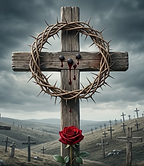


Confessing Total Dependence: Crying out from the depths of our need, trusting that His unfailing grace is our only path to redemption and peace.
In ancient Hebrew manuscripts, God’s personal sacred name appears roughly 6,800 times as the four consonants Yehovah YHWH (יהוה). and changed to LORD
Left to ourselves, we stand utterly powerless against sin, stripped of any hope or remedy we could ever manufacture. True rescue belongs solely to Yehovah.
To call upon His name is not an empty recitation, but a complete and deliberate surrender of self-reliance. It is falling on our faces before the living God, acknowledging our absolute spiritual bankruptcy, and laying hold of His covenant mercy. When we call on Yehovah, we are:
Renouncing Every False Refuge: Abandoning good works, human tradition, and self-righteousness as worthless shields against judgment.
Confessing Total Dependence: Crying out from the depths of our need, trusting that His unfailing grace is our only path to redemption and peace.
Pledging Sole Allegiance: Publicly declaring Him our King, Master, and Defender before a watching world, unashamed to bear His name.
Salvation is found under no other banner. When we reach the end of our own strength and invoke the name of Yehovah in heartfelt repentance and faith, He answers—breaking the grip of sin, washing away condemnation, and anchoring our souls in everlasting life. He alone is our rock, our fortress, and our only hope.
The four-letter Hebrew name of God—the Tetragrammaton ($YHWH$, יהוה)—appears approximately 6,828 times throughout the Hebrew scriptures
In modern English translations, it is traditionally rendered as LORD (in small capital letters), a convention that traces back more than two millennia
The Hebrew Text: The Tetragrammaton (יהוה)The Consonantal Root: Ancient biblical Hebrew was written strictly without vowels. The four consonants Y-H-W-H (Yod, He, Waw/Vav, He) are directly connected to the Hebrew verb "to be" (hayah), reflecting the name revealed to Moses at the burning bush
"I AM WHO I AM" (Exodus 3:14).Pronunciation Nuances:Yahweh: The consensus among historical-critical and Semitic linguists favors Yahweh based on early transliterations (such as the Greek Iabe documented by the early Church fathers) and ancient Hebrew grammar patterns.Yehovah / Jehovah: In the Masoretic Text (standardized around the 6th–10th century CE),
Hebrew scribes added vowel points (niqqud) to the consonants. Rather than vocalizing the sacred name itself, they inserted the vowel markings for Adonai ("Lord") or Elohim ("God") onto the consonants $YHWH$.
This served as a perpetual reading instruction (qere perpetuum) to say "Adonai" aloud rather than utter the sacred name. When those vowel markings are read directly with the consonants, it yields YeHoWaH / Yehovah (anglicized into Jehovah in late medieval Latin and early English).
The revelation, sanctity, and invoking of the divine Name—represented in Hebrew scripture by the Tetragrammaton (YHWH, often rendered "LORD" in English translations, related to Ehyeh Asher Ehyeh or "I AM")—is a central theological thread woven throughout the Bible.
Key scriptures reveal, define, and honor the sacred Name across distinct themes:
The Divine Self-Revelation and Definition
Exodus 3:13–15: When Moses asks God what Name he should report to the Israelites in Egypt, God reveals the fundamental root of His identity: "I AM WHO I AM." He instructs Moses to tell the people that "I AM has sent me to you," affirming that the Yehovah (YHWH), the God of Abraham, Isaac, and Jacob, is His memorial name to all generations.
Exodus 6:2–3: God speaks to Moses, explaining that while He appeared to Abraham, Isaac, and Jacob as El Shaddai (God Almighty), His covenant Name was not fully made known to them in the redemptive manner Israel was about to witness.
Exodus 34:5–7: As Yehovah descends in a cloud upon Mount Sinai, He proclaims His Name before Moses. The declaration connects the Name directly with divine character: merciful, gracious, slow to anger, abundant in steadfast love and faithfulness, forgiving iniquity, yet just.
Protection and Sanctity of the Name
Exodus 20:7 & Deuteronomy 5:11: The Third Commandment explicitly forbids taking or misusing the Name in vain (for falsehood, emptiness, or frivolous oaths), establishing that the Name Yehovah carries the holiness of God's own presence.
Leviticus 22:31–32: God commands Israel to observe His decrees and not profane His holy Name, identifying Himself as the one who sanctifies His people.
Refuge, Honor, and Invocation
Proverbs 18:10: The Name of Yehovah is described as a fortified tower; the righteous run into it and find safety.
Psalm 8:1 & 8:9: A foundational psalm of praise celebrating the majesty and glory of God's Name established across the heavens and the earth.
Psalm 20:7: A contrast between earthly military might and divine trust: while some place confidence in chariots and horses, the people of faith stand firm by calling upon the Name of the LORD.
Joel 2:32: A prophetic assurance that everyone who calls upon the sacred Name of Yehovah will be delivered and saved.
Eschatological and Global Proclamation
Malachi 1:11: A prophetic vision declaring that from the rising to the setting of the sun, Yehovah Name will be magnified and held in reverence among the nations.
Zechariah 14:9: Looking forward to the universal acknowledgment of God's sovereignty, where Yeshua will be King over all the earth, and "on that day the LORD will be one and His name one."
New Testament Connections
Matthew 6:9: In the opening petition of the Yehovah Prayer, Yeshua teaches disciples to prioritize reverence for the Name: "Hallowed be your name." of Yehovah
John 8:58 & John 17:6, 11–12: In the Gospels, Yehovah invokes the self-existent title ("Before Abraham was, I am") and prays that the Father protect His followers by the power of the Name given to Him.
Acts 4:12 & Philippians 2:9–11: Apostolic writings connect salvation and supreme exaltation to the Name of Yeshua, affirming that God bestowed the name above every name, before which every knee will bow.
Exploration Checkpoints
Linguistic Origins: Contrast the grammatical roots of the Tetragrammaton with related titles such as Adonai or Elohim.
Temple & Tabernacle Theology: Track how the Ark of the Covenant and the Jerusalem Temple were built specifically to "house" the divine Name.
New Testament Christology: Examine how the early church applied Old Testament passages concerning the sacred Name directly to Yeshua